
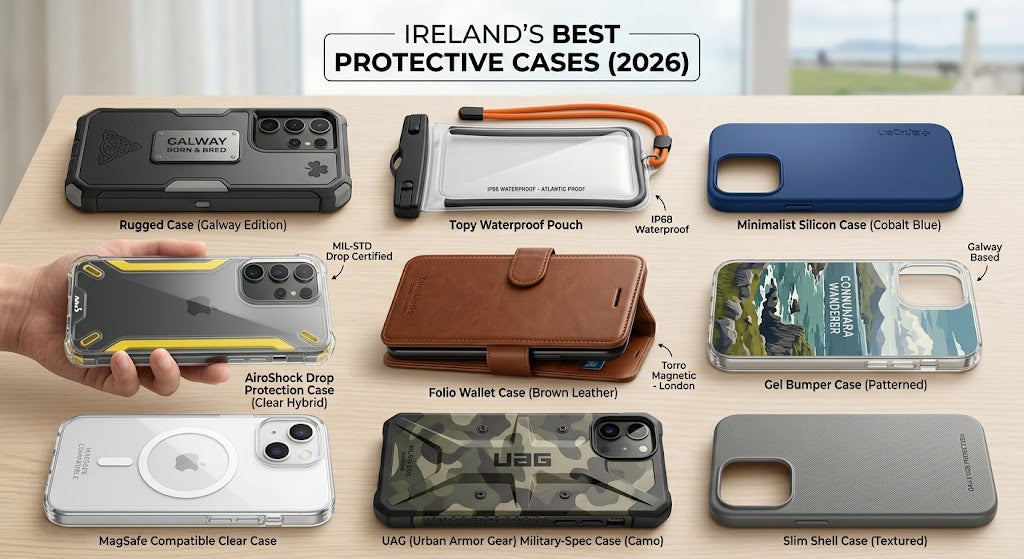
Phone Cases: Which Type Offers the Best Protection? Guide 2026
A phone case is one of the simplest and most practical accessories you can buy for a smartphone. It can help protect your device from everyday scratches, knocks, accidental drops and general wear. However, not every phone case provides the same level of protection.
Slim cases, clear cases, silicone covers, hybrid cases, rugged cases and wallet cases are all designed for different types of users. Some prioritise lightweight design and appearance, while others are built specifically to provide stronger protection against impacts.
This choice can be particularly important when buying or using a premium smartphone such as an iPhone Pro, Samsung Galaxy S Ultra or another high-value device. It is also relevant for refurbished phones, where protecting the phone after purchase can help maintain its condition and usability.
The best phone case is therefore not necessarily the thickest or most expensive one. The right choice depends on how you use your phone, where you use it and the type of protection you need.
This Ireland-focused guide explains the main types of phone cases, their strengths and limitations, and what to look for when choosing a protective case in 2026.
Quick Answer: Which Phone Case Offers the Best Protection?
If maximum physical protection is your priority, a rugged or heavy-duty phone case generally provides more protection than a basic slim case. Rugged cases commonly use reinforced corners, shock-absorbing materials, raised edges and stronger outer shells.
However, a rugged case is not automatically the right choice for everyone.
For normal everyday use, a hybrid case can provide a useful balance between protection, comfort and size. Slim or clear cases may be suitable for users who mainly want protection against scratches and minor knocks without adding much bulk.
The most important features to consider are:
-
Reinforced corners
-
Shock-absorbing construction
-
Raised edges around the display
-
Camera protection
-
Good grip
-
Secure fit
-
Durable materials
-
Easy access to buttons and ports
-
Wireless charging compatibility where required
-
Appropriate size and weight
If you are also deciding how much to spend on the smartphone itself, the fonez4u2 guide How to Choose the Right Phone Without Overspending in Ireland 2026 can help you consider phone features, budget and long-term value before buying accessories.
Key Takeaways
-
Rugged cases generally provide the strongest protection against drops and impacts.
-
Hybrid cases offer a balance between protection and everyday usability.
-
Slim cases are useful when low weight and minimal bulk are priorities.
-
Clear cases allow the original smartphone design to remain visible.
-
Silicone cases can provide comfortable handling and good grip.
-
Raised bezels can help reduce direct contact between a screen and flat surfaces.
-
Camera protection is increasingly important because modern camera modules often protrude from the phone.
-
The case must be designed for the exact smartphone model.
-
Wireless charging compatibility should be checked before buying.
-
A good phone case should complement, rather than replace, a screen protector where additional display protection is wanted.
-
Refurbished smartphones can also benefit from protective cases.
-
The best case depends on your lifestyle rather than simply its price or thickness.
How We Compare Different Phone Cases
There is no single case design that is perfect for every smartphone owner. Someone working in an office may have very different protection requirements from someone who works outdoors or travels frequently.
When comparing phone cases, consider the following factors:
| Feature | Why It Matters |
|---|---|
| Drop protection | Helps reduce the effect of accidental falls |
| Corner protection | Corners can experience significant impact during a drop |
| Raised edges | Can reduce direct contact between the screen and flat surfaces |
| Camera protection | Helps protect exposed camera modules |
| Grip | Can reduce the chance of accidental slips |
| Materials | Different materials provide different levels of flexibility and impact resistance |
| Fit | A secure fit helps keep the case properly positioned |
| Thickness | More protection can sometimes mean more bulk |
| Charging compatibility | Important if you use wireless or magnetic charging |
| Everyday comfort | A case needs to remain practical for regular use |
A case should therefore be assessed as a complete design rather than by material or appearance alone.
Why Does a Phone Case Matter?

Modern smartphones are built with increasingly durable materials, but no smartphone is completely resistant to accidental damage.
A phone can fall from a desk, slip from a pocket, slide from a table or be dropped while being used outdoors. Even if the display survives an impact, the frame, rear glass, buttons or camera area can still suffer damage.
A phone case creates an additional layer between the device and its surroundings.
It cannot guarantee that a phone will survive every fall. The height, angle, surface and location of impact all influence the result. However, a suitable case can help reduce exposure to common everyday damage.
1. Protection Against Everyday Scratches
A case can help prevent the rear and sides of a smartphone from coming into direct contact with surfaces that may cause scratches or scuffs.
2. Additional Protection During Drops
Thicker or reinforced cases can provide additional material between the phone and the surface during an accidental fall.
3. Protection for High-Value Smartphones
A protective case can be particularly useful when the smartphone itself represents a significant purchase.
4. Maintaining the Phone's Condition
Reducing scratches, dents and general physical wear can help keep a smartphone in better condition during longer-term ownership.
Rugged Phone Cases

Rugged cases are designed for users who place a higher priority on protection than slimness.
They are typically thicker than standard cases and may include multiple protective layers, reinforced corners, shock-absorbing materials and raised edges.
1. Reinforced Corners
Corners are important because smartphones can land on an edge or corner during an accidental drop. Reinforced corners can provide additional protection in these situations.
2. Shock-Absorbing Construction
Some rugged cases use flexible materials or multiple layers designed to absorb or distribute impact.
3. Raised Screen and Camera Edges
A raised bezel around the display and camera area can help reduce direct contact with surfaces when the phone is placed down.
4. Outdoor-Friendly Design
Rugged cases can be particularly useful for outdoor workers, travellers and users who frequently handle their phones in demanding environments.
Hybrid Phone Cases

Hybrid cases combine different materials or layers to provide a balance between protection and everyday usability.
A common construction uses a flexible inner section with a more rigid outer shell.
1. Balanced Protection
Hybrid cases can offer more protection than many ultra-thin cases without being as bulky as some heavy-duty designs.
2. Better Everyday Handling
Because they are often less bulky than rugged cases, hybrid cases can be easier to carry in pockets and bags.
3. Suitable for Everyday Users
A hybrid case can be a practical option for users who want stronger protection but do not need an extremely rugged design.
Slim Phone Cases

Slim cases focus on maintaining the original size and feel of a smartphone while adding basic protection.
They are particularly popular with users who dislike thick cases.
1. Lightweight Design
A slim case adds relatively little weight compared with many rugged alternatives.
2. Protection From Minor Damage
Slim cases can help protect against scratches, scuffs and smaller everyday knocks.
3. Lower Impact Protection
Because there is less material available to absorb impact, a very thin case may not provide the same drop protection as a rugged or reinforced case.
4. Who Should Choose a Slim Case?
A slim case may suit someone who handles their phone carefully, primarily wants scratch protection and prefers a lightweight setup.
Clear Phone Cases

Clear cases allow the original colour and design of a smartphone to remain visible.
They are particularly popular with users who have chosen a specific phone colour and do not want to cover it with an opaque case.
1. Showing the Original Phone Design
The transparent construction allows the smartphone's appearance to remain visible.
2. Everyday Protection
A well-designed clear case can protect against scratches, minor impacts and general surface wear.
3. Check the Construction
Not all clear cases are equally protective. Look for reinforced corners, raised edges and a secure fit rather than choosing solely on appearance.
4. Potential Discolouration
Some transparent materials can become less clear or develop a yellowish appearance over time depending on the material, environmental exposure and usage.
Silicone Phone Cases

Silicone cases are known for their soft feel and comfortable grip.
They can be easy to install and remove while providing a flexible layer around the smartphone.
1. Comfortable Grip
The softer surface can make a phone easier to hold securely.
2. Flexible Construction
Silicone-style cases can fit closely around the device while remaining relatively easy to remove.
3. Everyday Protection
They can provide useful protection against scratches and minor knocks, although protection varies between individual designs.
4. Good Choice for Casual Users
Users who prioritise comfort and grip over maximum drop protection may find silicone cases practical for everyday use.
Wallet and Folio Phone Cases

Wallet cases combine smartphone protection with space for cards or other small items.
Some designs include a front cover that folds over the display.
1. Front and Rear Coverage
The front flap can provide additional protection for the display when the phone is not being used.
2. Fewer Items to Carry
A wallet case can reduce the need to carry a separate phone wallet.
3. Increased Bulk
The additional material can make the phone thicker than it would be with a standard case.
4. Consider Your Charging Habits
Users who frequently rely on wireless charging should check compatibility before choosing a wallet-style design.
Bumper Phone Cases

Bumper cases primarily focus on protecting the sides and corners of a smartphone.
They can provide a lightweight alternative to a full-cover case.
1. Side and Corner Protection
The bumper design can add protection around areas that are particularly exposed during drops.
2. Lightweight Construction
Some bumper cases add less bulk than full protective covers.
3. Limited Rear Protection
Depending on the design, parts of the rear panel may remain exposed. Users who want full back protection may prefer a conventional case.
Magnetic and MagSafe-Compatible Cases

Magnetic cases are designed to work with compatible magnetic accessories, particularly within the Apple ecosystem.
However, magnetic compatibility and physical protection are two different considerations.
1. Magnetic Accessory Compatibility
A compatible case can make it easier to use magnetic wallets, stands and charging accessories.
2. Protection Still Matters
A magnetic case can be slim, hybrid or rugged. The presence of magnets does not automatically determine its protective performance.
3. Check Your Smartphone Model
Magnetic accessories and case designs can vary between phone generations, so compatibility should always be checked before purchase.
Which Phone Case Is Best for Drop Protection?

If accidental drops are your main concern, focus on the case's construction rather than simply its appearance.
A protective drop-resistant design should ideally include several features.
1. Reinforced Corners
Corners can experience concentrated impact during a fall, making reinforcement particularly useful.
2. Shock-Absorbing Materials
Flexible or layered materials can help provide additional protection against impacts.
3. Raised Edges
Raised bezels can help keep the display and camera area slightly away from flat surfaces.
4. Secure Fit
The case should fit the exact phone model firmly without excessive movement.
5. Good Grip
A textured or grippy surface may also reduce the likelihood of accidentally dropping the phone.
No case can guarantee complete protection. A protective case should be viewed as one part of sensible smartphone care.
Why Raised Edges and Bezels Matter

Raised edges are a small but important feature of many protective phone cases.
When a smartphone is placed face down, a raised bezel can help prevent the display from sitting directly against the surface.
1. Screen Separation
The raised edge creates a small amount of space between the display and a flat surface.
2. Camera Protection
A raised section around the camera can help prevent direct contact between camera lenses and surfaces.
3. Look for Consistent Coverage
The protective lip should extend around the relevant edges rather than providing protection only in one area.
Should You Use a Screen Protector With a Phone Case?
A phone case and screen protector perform different jobs.
A case mainly protects the rear, sides and corners, while a screen protector adds another protective layer over the display.
1. Cases Protect the Phone's Body
A case can help protect the rear panel, frame and corners.
2. Screen Protectors Add Display Protection
A screen protector can help reduce the risk of scratches and surface damage to the display.
3. Check Compatibility
Some cases have very raised or tight edges, so make sure the screen protector and case are designed to work together.
Using both can provide a more complete protection setup than relying on either accessory alone.
Phone Cases for iPhones

Choosing the correct iPhone case starts with identifying the exact model.
Different iPhone generations can have different dimensions, camera layouts, buttons and other physical characteristics.
1. Check the Exact iPhone Model
Do not assume that cases for similarly sized iPhones will fit correctly.
2. Consider Camera Protection
Recent iPhones can have prominent camera modules, so a case with appropriate camera protection can be useful.
3. Consider Magnetic Accessories
If you use compatible magnetic accessories, check whether the case supports them.
4. Protect Older and Refurbished iPhones
If you are considering an older iPhone, protecting it after purchase can be particularly useful for long-term ownership.
The fonez4u2 guide Older iPhone vs Refurbished Newer iPhone: Which Is Better? provides additional information for shoppers comparing older and newer refurbished iPhones.
Phone Cases for Samsung Galaxy Phones

Samsung Galaxy phones also require model-specific cases.
A Galaxy S-series case should not automatically be expected to fit a Galaxy A-series device.
1. Check the Galaxy Model
Confirm the exact model before buying a case, including the series and generation.
2. Protect Large Displays
Many Galaxy smartphones have large displays, making raised edges and a good screen-protection setup useful.
3. Consider Camera Protection
Galaxy flagship models can feature large camera systems, so check whether the case provides suitable protection around the camera area.
4. Match the Case to Your Galaxy Range
If you are deciding between Samsung's A and S series, the fonez4u2 guide Samsung A Series vs S Series: Which Is Right for You? 2026 Guide explains the broader differences between the two ranges.
Phone Cases for Refurbished Smartphones

Refurbished smartphones can benefit from protective cases just like new devices.
Once you purchase a refurbished phone, protecting its physical condition can help reduce additional wear caused by everyday use.
1. Protect Against New Scratches
A case can help reduce contact between the phone and hard surfaces.
2. Reduce Everyday Wear
A suitable case can help protect corners, sides and the rear panel.
3. Support Longer Ownership
If you plan to keep a refurbished phone for several years, physical protection becomes an important part of everyday care.
4. Combine Protection With Care
A case should be combined with sensible storage, careful handling and appropriate charging practices.
For more information about selecting refurbished devices, see How to Choose a Refurbished Phone in Ireland: 2026 Guide.
How to Choose a Phone Case for Your Lifestyle
The right case depends heavily on your routine.
1. For Office Workers
A slim, clear or hybrid case may be suitable if your phone is mainly used indoors and handled carefully.
2. For Outdoor Workers
A rugged case with reinforced corners and strong grip may be more appropriate.
3. For Frequent Travellers
A protective case with good grip and raised edges can be useful when moving between different environments.
4. For Students
A hybrid case can provide a practical balance between protection, portability and everyday use.
5. For People Who Frequently Drop Phones
A rugged or reinforced case is worth considering if accidental drops happen regularly.
What Materials Are Used in Phone Cases?

Different phone cases use different materials, and each material can provide different characteristics.
| Material | Common Characteristics |
|---|---|
| TPU | Flexible, lightweight and commonly used in everyday cases |
| Silicone | Soft feel and comfortable grip |
| Polycarbonate | Rigid and lightweight |
| Leather | Premium appearance and traditional feel |
| Hybrid construction | Combines multiple materials or layers |
| Flexible plastic | Lightweight and easy to fit |
| Reinforced materials | Designed for stronger protection |
The material itself does not determine whether a case is good or bad.
Construction, thickness, fit, corner reinforcement and raised edges all contribute to the overall protective design.
Common Phone Case Buying Mistakes

Buying a case based only on colour or appearance can result in inadequate protection or compatibility problems.
1. Buying the Wrong Phone Model
Always confirm the exact model before ordering.
2. Choosing Only by Price
The cheapest case may not provide the features you actually need, while the most expensive case is not automatically the most protective.
3. Choosing the Thinnest Case Automatically
A very thin case may provide less impact protection than a thicker design.
4. Ignoring Camera Protection
Modern camera modules can protrude from the phone, so check whether the case provides adequate protection around them.
5. Forgetting Wireless Charging
If you use wireless charging, make sure the case is compatible.
6. Ignoring Grip
A slippery case can make accidental drops more likely.
7. Choosing a Loose-Fitting Case
A case should fit securely around the phone without excessive movement.
How Much Should You Spend on a Phone Case?
There is no universal price that every smartphone owner needs to pay.
The right budget depends on the value of your phone, your lifestyle and the level of protection you require.
1. Basic Everyday Protection
If you mainly want scratch and minor-impact protection, a simple case may be sufficient.
2. Moderate Protection
A hybrid case can be suitable when you want additional protection without excessive bulk.
3. Maximum Protection
If you regularly work outdoors, travel frequently or have a history of dropping phones, investing in a more protective case may be appropriate.
4. Consider the Value of Your Phone
When using an expensive flagship smartphone, protecting the device can be a sensible part of long-term ownership.
The objective should be to choose the appropriate protection, rather than simply the cheapest or most expensive option.
What to Check Before Buying a Phone Case

Before buying a case for an iPhone, Samsung Galaxy or another smartphone, run through this checklist.
1. Confirm the Exact Model
Check the model name and generation.
2. Check the Camera Cutout
Make sure the camera area aligns correctly.
3. Check Button Access
The case should allow comfortable access to all important buttons.
4. Check Charging Ports
The case should not make connecting the charging cable unnecessarily difficult.
5. Check Wireless Charging Compatibility
This is particularly important if you regularly use a wireless charging pad or stand.
6. Check Screen Protection
Look for raised edges around the display if additional edge protection is important to you.
7. Check the Grip
The case should feel secure and comfortable in your hand.
8. Consider Thickness
Choose a thickness that provides the protection you need without making the phone impractical to carry.
Phone Cases for Travel in Ireland and Abroad
Travelling can expose smartphones to more frequent handling, drops and accidental contact with other items.
A practical travel setup should therefore consider both physical protection and charging.
1. Choose a Secure Case
A case with good grip and reinforced corners can be useful when moving around airports, public transport, hotels and tourist locations.
2. Carry a Spare Charging Cable
A second compatible cable can be useful when travelling.
3. Consider a Power Bank
A power bank can provide additional charging when access to a wall socket is limited.
4. Consider a Tracker for Important Belongings
A compatible tracker can be useful for luggage or other important belongings.
For a wider list of useful smartphone accessories, see Best Phone Accessories Everyone Should Have in Ireland in 2026.
Phone Cases for Students in Ireland

Students often carry smartphones between home, college, public transport, cafés and social activities.
That makes durability and portability important.
1. Choose Practical Protection
A hybrid or moderately protective case can provide useful protection without excessive weight.
2. Consider a Screen Protector
Students often carry phones alongside books, bags and other items, so additional display protection can be useful.
3. Keep Charging Accessories Available
A reliable charger and spare cable can be practical additions to a student phone setup.
4. Consider a Power Bank
A portable power bank can be useful during long days away from home.
If you are choosing the smartphone itself, the guide Best Smartphones for Students in Ireland 2026 covers additional factors for student buyers.
Phone Cases for Photography and Video
People who use their smartphones heavily for photography and video should pay particular attention to the camera area.
1. Protect the Camera Module
A raised camera surround can help reduce direct contact between the lenses and surfaces.
2. Avoid Blocking the Camera
The case should not interfere with the camera lenses, flash or sensors.
3. Consider Grip
Good grip can be especially useful when holding the phone for photography or video recording.
4. Match Protection With Your Phone
If you have invested in a camera-focused smartphone, protecting the device can support longer-term use.
The fonez4u2 guide Best Smartphones for Photography on a Budget in Ireland 2026 covers smartphone photography considerations in more detail.
Phone Cases and Long-Term Smartphone Ownership
A phone case cannot prevent every type of smartphone damage, but it can help reduce some common forms of physical wear.
This can become particularly useful if you intend to keep your phone for several years.
1. Reduce Physical Wear
A case can help protect the rear panel, sides and corners from everyday contact.
2. Protect Refurbished Devices
For refurbished smartphones, protecting the device after purchase can help maintain its physical condition.
3. Support Longer Use
Keeping a smartphone in good physical condition can make long-term ownership more practical.
4. Combine Protection With Good Habits
A case should be combined with careful handling, suitable charging accessories and sensible storage.
If you are considering how long a refurbished phone can remain useful, see How Long Should a Refurbished Phone Last? 2026 Guide.
Phone Case Comparison

The following guide can help you match case type with your main priority.
| Your Priority | Case Type to Consider |
|---|---|
| Maximum physical protection | Rugged case |
| Balance between protection and size | Hybrid case |
| Lightweight design | Slim case |
| Show the phone's original colour | Clear case |
| Comfortable grip | Silicone case |
| Front and rear coverage | Wallet or folio case |
| Magnetic accessories | Compatible magnetic case |
| Outdoor use | Rugged or reinforced case |
| Office use | Slim or hybrid case |
| Frequent accidental drops | Rugged case |
| Minimal bulk | Slim case |
These are general categories. The actual protection offered depends on the individual case's construction and quality.
Building a Complete Smartphone Protection Setup
A case is only one part of a complete smartphone protection strategy.
1. Add a Screen Protector
A screen protector can provide an additional layer over the display.
2. Protect the Camera
Use a case with suitable camera protection where appropriate.
3. Use Reliable Charging Accessories
Poor-quality charging accessories can create separate safety and performance concerns, so compatibility and quality should be considered.
4. Keep the Phone Clean
Regularly cleaning the phone and case can help prevent accumulated dirt and debris from causing unnecessary wear.
5. Replace Damaged Cases
If a case becomes badly cracked, loose or worn, replacing it may be sensible because its protective performance can be affected.
Final Phone Case Checklist
Before buying a phone case, ask yourself:
-
Does it fit my exact smartphone model?
-
Does it protect the corners?
-
Does it have raised edges?
-
Does it protect the camera area?
-
Does it provide enough grip?
-
Is the thickness comfortable for everyday use?
-
Does it support my charging setup?
-
Is it compatible with wireless charging if needed?
-
Does it support my magnetic accessories if required?
-
Is the material suitable for my lifestyle?
-
Does it provide enough protection for the value of my phone?
If the answer to these questions is yes, the case is more likely to meet your everyday requirements.
Final Thoughts

The best phone case for protection depends on how much protection you actually need.
For users who prioritise maximum protection against accidental drops and impacts, a well-designed rugged case generally offers the strongest protective approach. Reinforced corners, shock-absorbing materials, raised edges and camera protection can all contribute to a more protective design.
For everyday users who want a balance between protection and comfort, a hybrid case can be a practical alternative. Slim, clear and silicone cases may be more suitable for people who prioritise lightweight design, appearance and comfortable handling.
The most important point is to avoid choosing a case based only on its appearance or price. Check the exact phone model, fit, corners, raised edges, camera protection, grip and charging compatibility before buying.
Whether you use an iPhone, Samsung Galaxy or refurbished smartphone, the right case can be a simple way to reduce everyday physical wear and help protect your device throughout its ownership.
Frequently Asked Questions About Phone Cases
1. Which type of phone case provides the most protection?
Rugged and heavy-duty cases generally provide the strongest physical protection because they often include reinforced corners, shock-absorbing materials and raised edges.
2. Are slim phone cases protective?
Yes. Slim cases can protect against scratches and minor knocks, although they generally provide less impact protection than rugged cases.
3. What is the best case for someone who frequently drops their phone?
A rugged or reinforced case with strong corners, raised edges, shock-absorbing construction and good grip is worth considering.
4. Are clear phone cases protective?
Yes. Clear cases can provide everyday protection, but their performance depends on the materials, thickness, corner design and raised edges.
5. Are silicone phone cases good for everyday use?
Silicone cases can be useful for everyday use because they are comfortable to hold and can provide good grip and basic protection.
6. Do thicker phone cases always provide better protection?
No. Thickness alone does not determine protection. Materials, construction, corners, raised edges and fit also matter.
7. Should I use a screen protector with a phone case?
A screen protector can provide additional display protection because a case mainly protects the phone's rear, sides and corners.
8. Do phone cases protect smartphone cameras?
Cases with raised or reinforced camera surrounds can help protect exposed camera modules from contact with surfaces.
9. Are rugged cases too bulky for everyday use?
Some rugged cases can be noticeably thicker and heavier. Users who want a balance between protection and portability may prefer a hybrid case.
10. Can I use the same case for different iPhone models?
Not necessarily. Different iPhone models can have different dimensions, camera layouts and button positions.
11. Can a Samsung Galaxy S case fit a Galaxy A-series phone?
You should not assume that it will. Galaxy S and A-series devices can have different dimensions and camera layouts.
12. What should I check before buying a phone case?
Check the exact phone model, fit, camera cutout, corner protection, raised edges, materials, grip and charging compatibility.
13. Are wallet cases protective?
Wallet cases can provide front and rear coverage, but protection depends on the case's construction and how securely it fits the smartphone.
14. Are expensive phone cases better?
Not necessarily. Price does not automatically determine protection. Construction, materials and protective features are more important.
15. What is the best phone case for travel?
A case with good grip, reinforced corners and raised edges can be useful for travel. A power bank and spare charging cable can also be practical.
16. Should I put a case on a refurbished phone?
Yes. A suitable case can help protect a refurbished phone from additional scratches, knocks and accidental drops.
17. How often should a phone case be replaced?
There is no fixed replacement period. Consider replacing it if it becomes cracked, loose, badly worn or no longer fits securely.
18. What is the best phone case for students?
A hybrid or moderately protective case can provide a useful balance between durability, portability and everyday comfort.
19. Do all phone cases support wireless charging?
No. Some cases can interfere with wireless charging, particularly if they are very thick or contain incompatible materials.
20. Is a hybrid phone case better than a slim case?
A hybrid case can provide more protection than many slim cases while remaining less bulky than some rugged designs. The better choice depends on the user's protection needs.
About fonez4u2
fonez4u2 is an Ireland-based Sim Free Specialist providing Sim Free Phones, tablets and phone accessories, along with device repair and phone unlocking services. The brand focuses on helping customers make practical choices based on device condition, compatibility, protection, value and long-term usability.
When choosing a smartphone accessory such as a protective phone case, customers should consider the exact device model, intended use, level of protection required and compatibility with other accessories. The right case can help protect a smartphone from everyday scratches, knocks and accidental drops while making the device more practical for everyday use.
Author
Shah Zaib
Shah Zaib is the author of this guide, covering smartphone buying, refurbished devices, accessories and mobile technology for customers in Ireland.
Reviewed By
fonez4u2 Technical Team | Refurbished Smartphone Specialists
This article has been reviewed for technical accuracy, smartphone compatibility considerations and practical guidance relevant to refurbished and everyday smartphone users.
Last Updated
September 2026
This guide was reviewed and updated in September 2026 to keep the information relevant to current smartphone users and accessory-buying considerations in Ireland.
Sources & Verification
This article provides general consumer guidance based on common smartphone protection and accessory considerations. Phone case designs, materials, dimensions, charging compatibility and protective features can vary between manufacturers and individual models.
Before purchasing a phone case, always confirm the exact smartphone model and generation and check the manufacturer's or retailer's product specifications for compatibility. Wireless charging, magnetic accessories, camera cut-outs and other features may also vary between cases.
Product availability and specifications can change over time, so current product information should be verified at the time of purchase.

Leave a comment
This site is protected by hCaptcha and the hCaptcha Privacy Policy and Terms of Service apply.